Maribel García-Ibáñez, Instituto Español de Oceanografía (IEO), CSIC, Spain
Marilaure Grégoire, University of Liège, Belgium
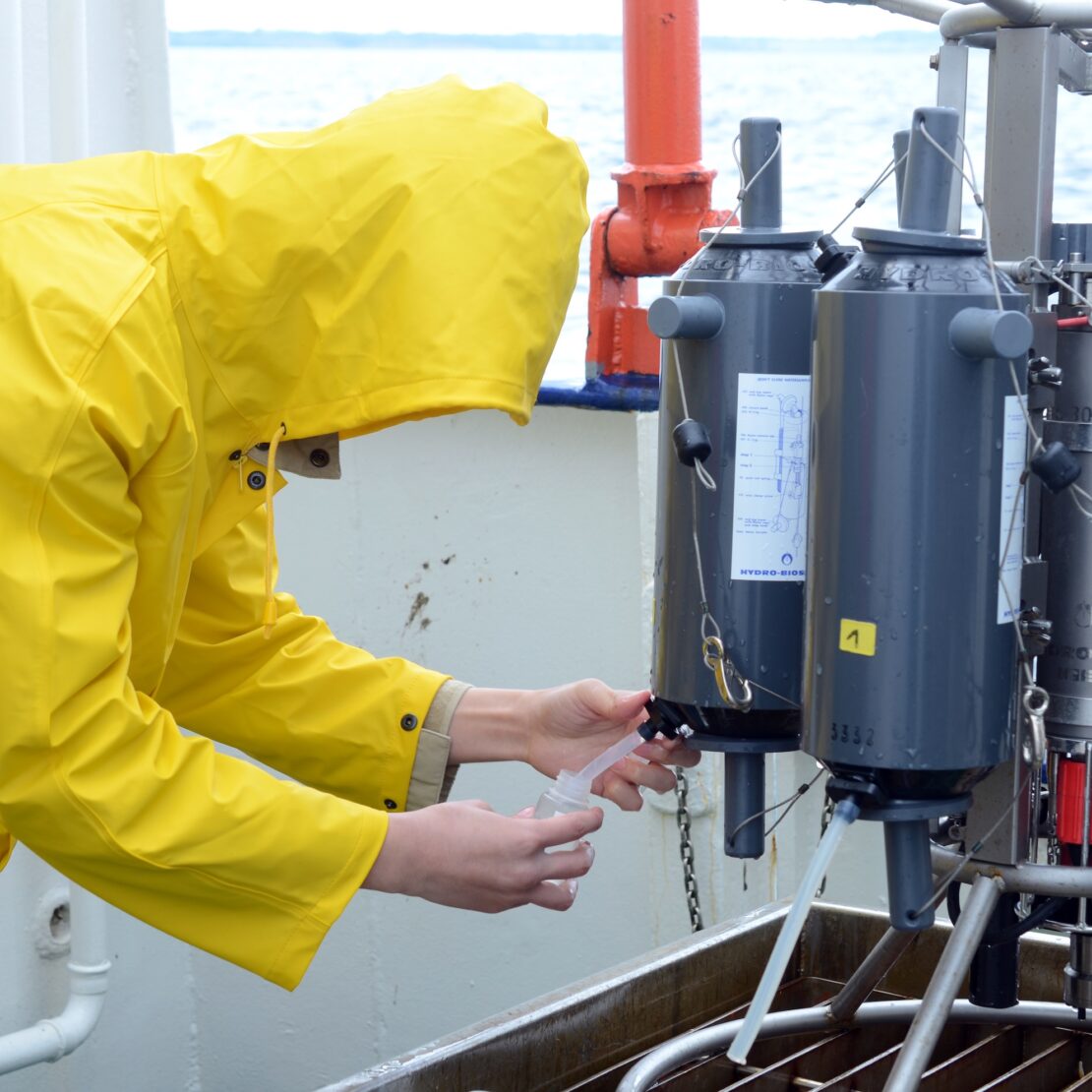
WP4 combines global and regional ocean data to deliver reliable, high-quality information on key biogeochemical variables like oxygen, carbon, nitrous oxide as well as methane, and coordinates global efforts to monitor marine debris. These efforts support ocean models, indicators, and improved understanding of environmental status of the ocean.

This task strengthens global coordination around biogeochemical ocean observations. Through the IOC’s International Ocean Carbon Coordination Project (IOCCP), WP4 connects BioGeoSea with major international programmes and data producers. This cooperation helps align methods, increase data sharing, and ensure that BioGeoSea’s observations and products are used and recognised worldwide.
Task 4.2 develops advanced 3D maps of dissolved oxygen across the global ocean. Using deep-learning approaches trained on millions of observations, the team will reconstruct oxygen fields from sparse measurements by combining in-situ data, satellite products, and outputs from modelling work in WP3. These maps support improved assessments of ocean deoxygenation and hypoxia from local to global scales.
This task enhances and expands the global MEMENTO database, the world’s central hub for nitrous oxide (N2O) and methane (CH4) observations. It improves data quality, traceability, and interoperability, and incorporates newly published datasets. Building on this strengthened foundation, the project will produce global concentration and flux maps of N2O and CH4 for both open-ocean and coastal regions—essential inputs for climate models and greenhouse-gas assessments.
Task 4.4 advances the global Marine Plastic Debris EOV by supporting the development of Technical Coordination Task Teams of the Integrated Marine Debris Observing System (IMDOS), updating international standards, and bringing together data integrators to promote harmonised, FAIR marine debris data. The task also assesses the readiness level of current observing technologies and provides guidance for building a robust, globally coordinated marine debris monitoring network.
This task delivers a comprehensive 3D mapped dataset of inorganic biogeochemical variables—from oxygen and nutrients to inorganic carbon—across the Mediterranean Sea. Building on the CARIMED data synthesis product, it creates the first harmonised Mediterranean product for inorganic biogeochemistry comparable to global datasets. The work enables accurate estimates of anthropogenic carbon storage, ocean acidification trends, and links between biogeochemistry, physical processes, and biological dynamics in the region.
Task 4.6 generates a new, global, high-resolution dataset of surface ocean acidification spanning over 40 years. Using enhanced machine-learning methods, it produces detailed fields of Inorganic Carbon variables at monthly, quarter-degree resolution, including in coastal zones influenced by rivers. These maps support indicator development and will update public communication tools such as the Ocean Acidification Stripes.