Christian Lønborg, Aarhus University, Denmark
Ute Schuster, University of Exeter, United Kingdom
WP2 aims to raise the TRL of BGC EOV observations by integrating multidisciplinary systems and enhancing their use in Earth System Models (ESMs). This will improve our ability to detect tipping points and assess impacts across time and space. Activities include advancing technology, standardising protocols, and cross-calibrating measurements. WP2 will connect with WP1 (EOV/ECV development), support ESM improvements (WP3), and contribute to BGC data products (WP4) for effective dissemination via the dashboard (WP5).




This task will identify synergies between ocean physics, biogeochemistry, and biodiversity observations. It involves active engagement via consortium meetings and virtual discussions, and close collaboration with other projects. Joint efforts will support co-design of approaches for testing and validation. Workshops will foster links with European Research Infrastructures, Copernicus services, ESA, EU projects, and institutes, helping assess needs and improve EOV observational technologies.
Task 2.2 will assess how well current observing systems (satellites, floats, ships, moorings) capture climate variability and extremes in particle size, an essential trait for understanding the biological carbon pump. We will explore combining existing platforms with novel sensors to improve temporal resolution and detect long-term trends. A case study will evaluate the system’s ability to detect climate-driven changes in particle size, using the 2023 North Atlantic marine heatwave as an example.
T2.3 will increase the readiness of POC and DOC measurments by cross-calibrating and standardising BBP sensor data from BGC-Argo and other platforms. T2.3. will also quantify sensor differences via ship-based tests and existing data. A validated POC dataset with uncertainties will be produced. Furthrmore will we assess if optical properties can be used as a proxy for DOC in coastal waters.
T2.4 will raise the TRL of transient tracer observations used to assess ocean ventilation timescales. GEOMAR will evaluate novel halogenated tracers (e.g., HCFCs, HFC-134a) alongside SF6 and CFC-12 in the Greenland Sea, where cold waters preserve tracer stability. Due to declining atmospheric CFC-12, new tracers are needed. Lab experiments will refine solubility functions, supporting improved tracer-based assessments of recently ventilated waters and enhancing EOV monitoring capabilities.
T2.5 will raise the TRL of dissolved inorganic nutrient observations by linking sensor-derived nitrate data to standard laboratory measurements. To obatin the neccesary data we will launch a public data call to compile a global coastal dataset of paired observations. This dataset will help identify conditions where sensors perform reliably and regions lacking sensor coverage. The results will guide future monitoring priorities and support standardisation efforts to improve nitrate sensor accuracy.
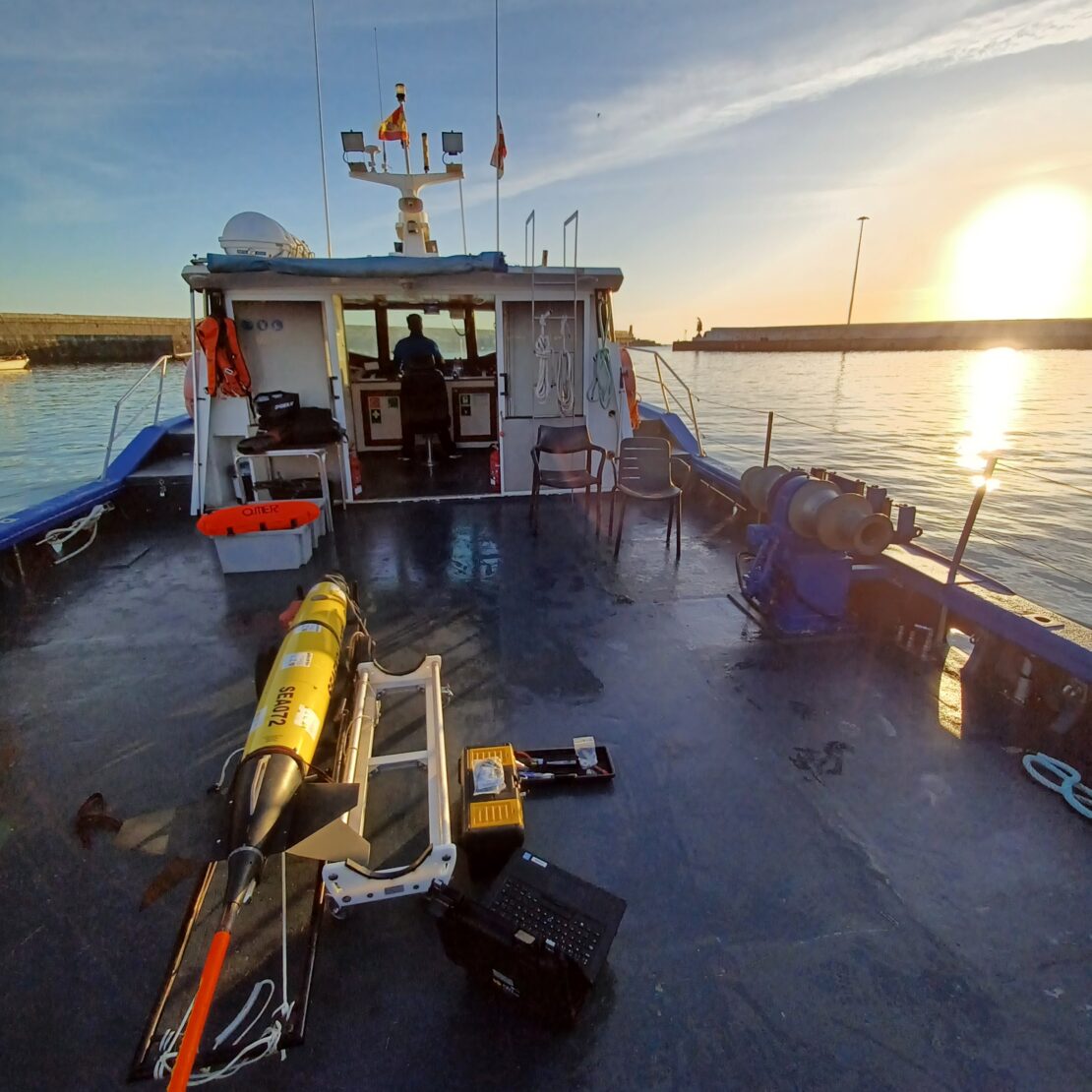
Gliders are key platforms for observing small-scale physical and BGC processes, but standardised BGC data processing remains a challenge due to sensor diversity and sampling complexity. T2.6 aims to identify key gaps limiting the effective use of glider-based BGC observations and foster collaboration between glider and BGC communities. Building on existing practices and expert input, T2.6. will support the development and implementation of specific tools to improve data accuracy, shape future observational strategies and contribute to updated Best Practices for glider-based BGC data.